India is among the world’s most dynamic film markets, where movie-watching is more than entertainment it’s a cultural habit. The multiplexes depend heavily on the regular supply of big international and domestic films to keep audiences thrilled. When a major studio such as Warner Bros. starts working under a stream-first company like Netflix, a number of questions are raised regarding how many of those films will actually be released to theatres.
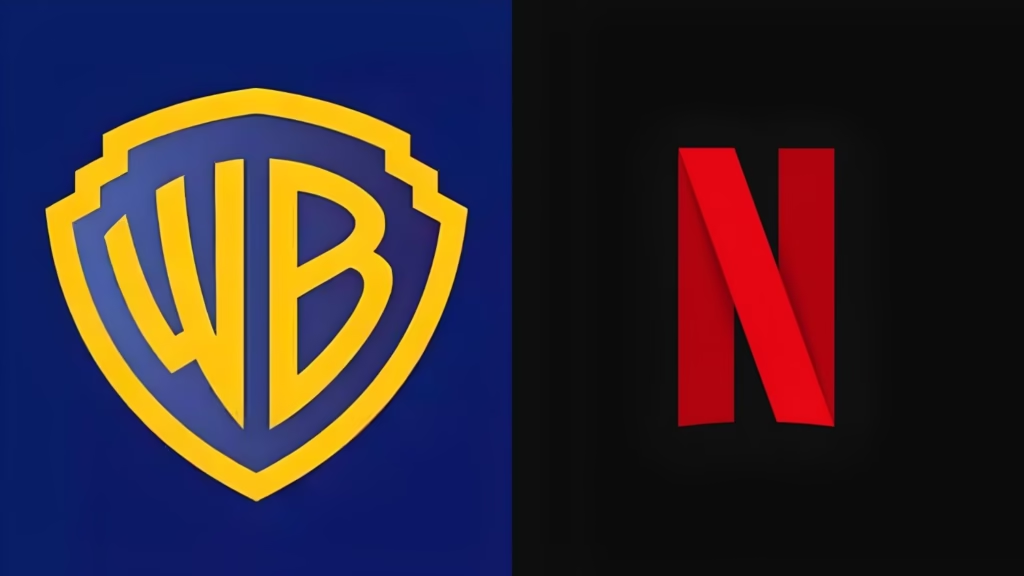
The global entertainment industry is abuzz with Netflix announcing its decision to acquire Warner Bros. Discovery, one of Hollywood’s oldest and most respected studios. While the deal is being celebrated globally as a huge milestone, the reaction back home is quite different. Strong objections have been raised by the Multiplex Association of India, warning that the merger will create major challenges for the Indian cinema ecosystem.
Why MAI Is Worried About the Netflix–Warner Bros. Merger
Warner Bros. has been a major contributor to the Indian box office for years with films like The Dark Knight, Aquaman, Barbie, and many more. Not only do these films attract large crowds, but they also provide diversity to the schedule at the cinema. MAI President Kamal Gianchandani believes that the Indian theatrical market is thriving because audiences love to see a blend of global, regional, and Bollywood films. Warner Bros.’ steady stream has helped Indian multiplexes keep outstanding release calendars through the year.
But MAI is apprehensive that this delicate balance would go awry with the merger. As demonstrated in its pioneering days, Netflix’s business model has always been ‘streaming’. It does not follow traditional studios’ approaches to first prioritise theatrical releases; large and small films usually get very short or limited releases in cinemas. This could drastically reduce big Hollywood titles coming into Indian theatres.
Netflix's Streaming-First Approach Could Shrink Theatrical Content
Netflix is one of the strongest OTT platforms in the world, but it has never shown full commitment to cinema-first strategy. Gianchandani pointed out that the platform has always shown a “limited and restrictive” interest in giving films a proper theatrical window. That’s where the problem lies. If Warner Brothers were to emulate this strategy, sending most of its productions to Netflix bypassing theaters, Indian multiplex chains will lose a mainstay of quality content. Most big Hollywood films also attract enormous footfalls, which, if taken away, might keep theaters scrambling for sure-shot revenues.
A shortage of strong theatrical content doesn’t only hurt the cinemas, but also the distributors, technicians, vendors, and thousands of employees dependent on the film exhibition business.
Possible Impact of the Deal on India's Cinema Ecosystem
MAI believes the Netflix-Warner Bros. merger may have several long-term implications on the Indian entertainment industry. These issues are not merely about movie releases but touch the entire ecosystem that supports theatres.
Less Choices for Moviegoers
Indian viewers like to watch international franchises in theatres. If their number declines or they stop coming entirely, moviegoers will have fewer options and would eventually lose interest in the habit of cinema-viewing.
Cinemas and Connected Industries: Falling Revenue
Major releases are important blockbusters that help the multiplex recover costs, pay salaries, and sustain operations. A decrease in major releases impacts not only the theatre but also other businesses like food operators, parking services, and local street markets that thrive on theatre audiences.
Shrinking or No Theatrical Window
A shorter theatrical window means that a movie shifts to OTT very fast, reducing the urgency for audiences to watch it in theatres. This trend is already hitting many movies post-pandemic. If Warner Bros titles are fully bypassing the theatres, the impact could be far worse.
Jobs and Infrastructure at Risk
The Indian film exhibition business employs lakhs in various roles. A slowdown in cinema releases could affect livelihoods and push smaller theatres into financial trouble.
Appreciating the gravity of the situation, MAI announced that it would reach out to regulatory authorities in India and abroad. It wants the merger to be examined in detail and reviewed for any deleterious impact on competition, consumer choice, or economic stability in the industry.
The MAI represents over 550 multiplexes and about 3,000 screens in India. A strong voice of the exhibition segment, its concerns mirror the apprehensions of theatre owners across the country. Its demand is straightforward: guarantee that the merger will not curtail the flow of movies to theatres.
How the Deal Could Strengthen Netflix in India's OTT Market
While theaters are concerned, analysts believe the move will substantially strengthen Netflix’s position in India’s streaming ecosystem. With the addition of Warner Bros., HBO, and HBO Max content, Netflix could be among the most powerful content libraries in the country. Karan Taurani of Elara Capital felt this merger would improve Netflix’s brand recall for films, originals, and premium TV content. This deal could also aid Netflix in increasing the current low ARPU it maintains in India out of competitive pricing. This could theoretically lead to a greater number of customers subscribing to higher-tier plans, which in turn would give Netflix an advantage over rivals such as Amazon Prime Video, Disney+ Hotstar, and JioCinema.
Understanding the Enormous Scale of this Acquisition
It means that Netflix has signed a definitive agreement with Warner Bros. Discovery; the deal includes Warner Bros. film studios, television studios, HBO, and HBO Max. The deal values the transaction at an enterprise value of $82.7 billion, a record for one of the entertainment industry’s largest deals ever. Netflix expects to bring together its global reach and technological innovation with Warner Bros.’ legendary storytelling heritage.
While this merger is predicted to alter the face of entertainment worldwide, markets such as India—where theatres still play a major cultural role—may continue to see both opportunities and challenges in the coming years.
What the deal means for the future of entertainment in India
India is a rare market where theatres and OTT have grown together. Jawan, Kalki 2898 AD, KGF, and Baahubali proved that the Indian audience still loves to watch films on the big screen. At the same time, OTT is part of daily modern entertainment.
The real challenge will be in striking a balance between the two forms of entertainments. In case major studios shift completely to streaming-first strategies, cinemas might lose their charm and economic stability. If Netflix chooses a hybrid model respecting theatrical releases, both cinemas and online streaming platforms can coexist and thrive. For the present, MAI’s misgivings bring into sharp focus the need for thoughtful regulations and long-term planning.
For India, the future of entertainment will be secured only if streaming innovation does not come at the cost of traditional cinema. Conclusion: Opportunity for OTT, Uncertainty for Theatres The Netflix–Warner Bros. merger is a game-changing development with huge global implications. For Indian OTT viewers, it promises a richer, diverse content line-up. But for multiplexes and cinema workers, it raises serious questions about content availability, revenue stability, and cultural continuity.
Web Stories
Top 5 OTT Releases to Watch in November 2025
7 Times Hindi Cinema Took Justice to Court—Watch These Before Haq
Top 6 Bollywood Action Franchises You Must Watch in 2025
From Debut to Depth: Ananya Panday’s 5 Must-Watch Performances
Satish Shah’s Comedy Legacy: Smiles We Still Carry
8 Hindi Dramas That Feel Like Home
5 Ashok Kumar Films That Still Touch the Heart
7 Abhishek Bachchan Films That Hit Different on OTT
Rekha Ji’s Birthday Special: Films That Made Her a Legend
9 Youth-Based Indian Shows That Still Live in Our Hearts
Top 10 Contestants: Rise and Fall
K-Drama Royalty: The 10 Richest Korean Actors of 2025
7 Cameos Made the Movie Feel More Special
TV That Raised Us: 7 Reality Shows We’ll Never Forget
From War 2 to Saiyaara: Bollywood’s Day 1 Blockbusters

 By
| December 6, 2025
By
| December 6, 2025