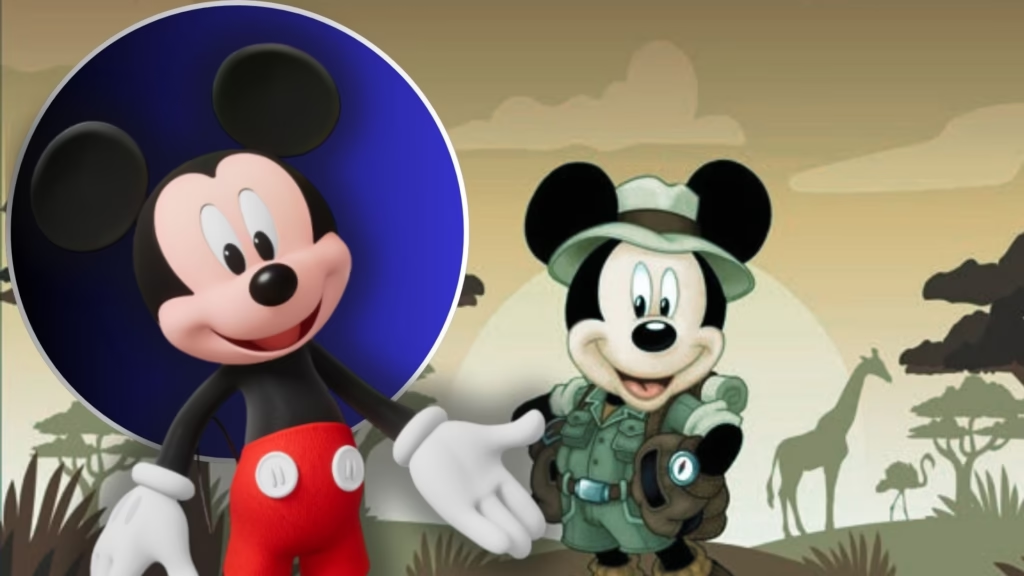
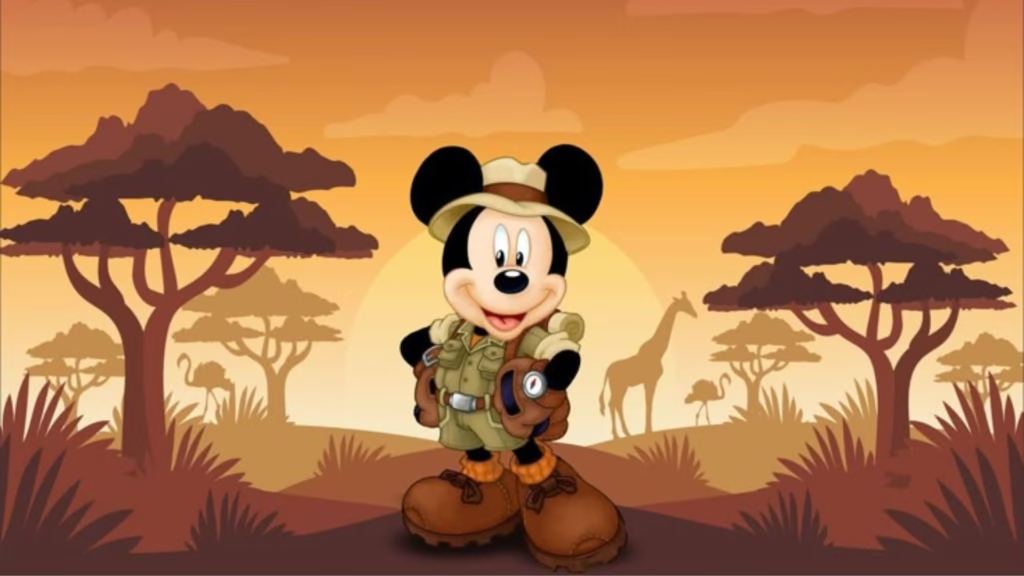
Mickey Mouseis not just a cartoon figure. For millions around the globe—including us in India as well—he’s a synonym for childhood, laughter, and fantasy. But have you ever known that Mickey has undergone a spectacular makeover over the years? From a black-and-white naughty mouse in 1928 to a sophisticated, amiable world icon, his tale reflects the progress of animation itself.
Let us go back in time and give a deep dive into Mickey Mouse’s phenomenal transformation over the years and know how this happy-go-lucky rodent won the hearts of each generation.
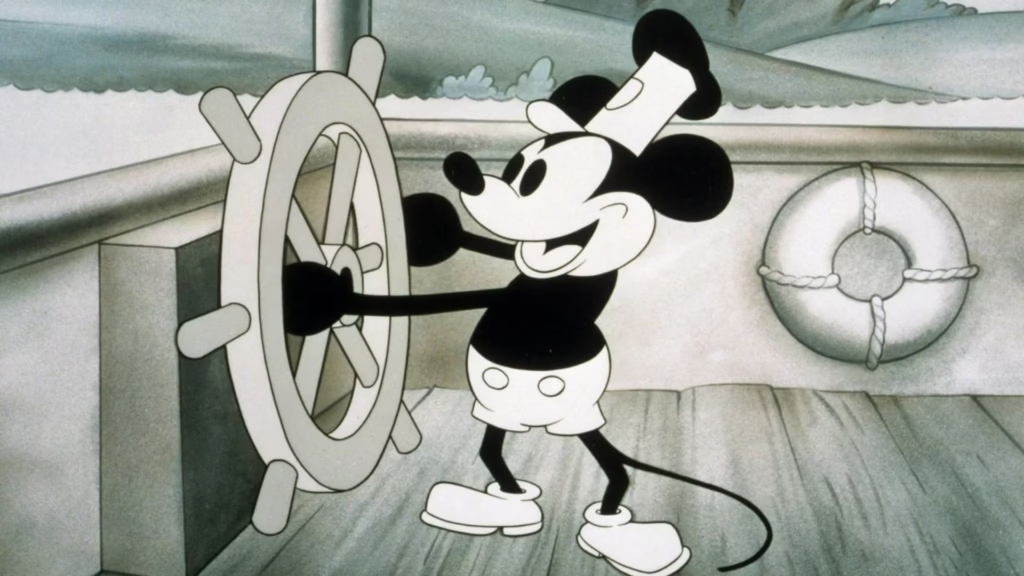
The Origin Story of an Icon: Mickey Mouse's Debut in Steamboat Willie
Credit: Google
Mickey Mouse officially debuted in the animated short film Steamboat Willie in 1928. This was no ordinary cartoon—it was an revolutionary one. Designed by Walt Disney and his friend, animator Ub Iwerks, Steamboat Willie was one of the first cartoons to use synchronized sound. It meant that the on-screen characters danced in exact time with the music and sound effects.
Silent movies were the norm back then, so Steamboat Willie was a novelty from the word go. Mickey’s antics and expressive nature made him an overnight sensation. Even in black and white, he seemed to capture imaginations and became a common name overnight. For most older Indians who grew up watching Doordarshan or early cable television, this old cartoon became a Sunday staple, even decades later.
How Mickey Mouse's Shift to Color Animation Revolutionized the Game
Credit: Google
Mickey Mouse made a revolutionary leap in 1935 with The Band Concert, his initial full-color cartoon. The move from black-and-white to color animation was a groundbreaking achievement not only for Disney, but for animation in general. It was made possible by Technicolor, a revolutionary technology that introduced rich colors to movie screens.
With this alteration, Mickey’s universe became more expressive and vibrant. His iconic red shorts, yellow shoes, and white gloves were instantly recognizable. This new period gave Disney animators a chance to explore more on storytelling, courtesy of the extra emotion and depth brought by color.
For audiences, particularly young kids, the vibrant and lively Mickey became even more endearing than ever. Indian children in the 90s and 2000s were brought up on these color renditions on networks such as Disney Channel India and Cartoon Network, so Mickey is a part of our personal pop culture memory lane.
Character Evolution: Mickey's Journey From Mischievous to Moral Icon
Though Mickey began as a cheeky, mischievous little mouse, he evolved over time to represent goodness, courage, and kindness. He would typically play tricks, cause trouble, and have a bit of a rebellious streak in his early cartoons.
But as the years went by and Disney changed to a more family-friendly style of storytelling, Mickey’s role was remade. By the 1940s and 50s, Mickey had evolved into a wholesome character who always did the right thing and assisted his friends. He was the ideal role model—courageous, kind, and cheerful.
This change was brought about by social and cultural influences of the day. With cartoons being viewed by families, there existed a need for a character who espoused good values. Mickey’s transformation into a nice, accountable character aligned well with the changing mood.
In India also, this iteration of Mickey gained particularly favor with parents and educators who viewed him as a character that kids could learn from rather than simply laugh at.
Mickey Mouse's Role in the Development of Contemporary Animation
Mickey’s development is directly related to progress in animation technology over the years. From hand-drawn images in the early years to advanced digital animation these days, Mickey has never lagged behind.
When animation technology enhanced, Mickey’s character became more streamlined, sophisticated, and more emotive. Disney kept him up-to-date with evolving animation styles while retaining the essence of his nature. This willingness to evolve is partly the reason he still evokes interest despite being close to 100 years old.
Mickey Mouse was also pivotal in establishing contemporary animation culture. His success paved the way for the Disney empire, and other studios followed suit and created their own classic characters—from Bugs Bunny to SpongeBob SquarePants. The effects of Mickey’s success can be seen in video games, theme parks, merchandise, and even AI-created digital content today.
In India, we’ve seen this influence through local adaptations and the dubbed versions of Mickey cartoons that brought global-quality animation into Indian homes. Shows like Mickey Mouse Clubhouse became staples for kids, combining entertainment with educational content.
Mickey Mouse as a Pop Culture Icon Across Generations
What makes Mickey Mouse so special is his timeless charm. Most cartoon characters lose their steam after a decade or two, but Mickey retains the magic to captivate fans from generation to generation.
For baby boomers, he was a nostalgic icon of Hollywood’s golden era. For millennials, he was the sunny face of childhood television. For Gen Z and the future, he’s a cyber icon visible on everything from Instagram GIFs to mobile games and Disney+ Hotstar streams.
Mickey’s face has become so recognizable that he even appears in high-fashion partnerships, theme park rides, and collectible artworks. His mug is plastered on everything from coffee mugs to T-shirts in Indian shopping malls, a testament to his global appeal. Actually, in India, Mickey has moved beyond entertainment into a symbol of joy, nostalgia, and even childhood education.
Why Mickey Mouse Still Matters in Today's Digital World
In this era of speed and technology, the question arises—does a cartoon mouse from 1928 have any significance left? The answer is a resounding YES.
Mickey Mouse symbolizes values that remain ageless: optimism, friendship, grit, and imagination. In an era where content is changing every minute, Mickey teaches us that storytelling ultimately comes down to connection.
Thanks to streaming services, timeless and fresh Mickey content is more accessible to Indian viewers than ever before. Be it through Mickey Mouse Clubhouse, Mickey and the Roadster Racers, or even retro shorts, there’s something for each age group.
He is also a part of the way children learn, with shows integrating music, words, and emotional intelligence in engaging ways. For parents in India who want to find good content, Mickey is still a name to trust.
Conclusion: Mickey Mouse's Amazing Evolution Is a Story of Creativity and Perseverance
From the silent screens of 1928 through to high-definition animated shows in 2025, Mickey Mouse’s phenomenal transformation throughout the decades is nothing short of remarkable. His experience is a masterclass in embracing change yet remaining loyal to one’s heritage.
As Indian fans, we’ve been part of this journey too. Whether it was watching Steamboat Willie in black and white or dancing to catchy songs on Mickey Mouse Clubhouse, the character has remained close to our hearts. Mickey isn’t just a mouse—he’s a symbol of imagination, innovation, and innocence. And even after nearly a century, his ears still bring smiles.
Web Stories
Top 5 OTT Releases to Watch in November 2025
7 Times Hindi Cinema Took Justice to Court—Watch These Before Haq
Top 6 Bollywood Action Franchises You Must Watch in 2025
From Debut to Depth: Ananya Panday’s 5 Must-Watch Performances
Satish Shah’s Comedy Legacy: Smiles We Still Carry
8 Hindi Dramas That Feel Like Home
5 Ashok Kumar Films That Still Touch the Heart
7 Abhishek Bachchan Films That Hit Different on OTT
Rekha Ji’s Birthday Special: Films That Made Her a Legend
9 Youth-Based Indian Shows That Still Live in Our Hearts
Top 10 Contestants: Rise and Fall
K-Drama Royalty: The 10 Richest Korean Actors of 2025
7 Cameos Made the Movie Feel More Special
TV That Raised Us: 7 Reality Shows We’ll Never Forget
From War 2 to Saiyaara: Bollywood’s Day 1 Blockbusters

 By
| July 18, 2025
By
| July 18, 2025